
Introduction
“German Shepherd behaviour problems are one of the most common complaints among GSD owners. These intelligent and energetic dogs often exhibit issues such as excessive barking, aggression, separation anxiety, destructive chewing, and leash pulling. The good news? Most of these German Shepherd behavior problems can be solved with proper training, exercise, and mental stimulation.”
The most common German Shepherd behavior problems—including excessive barking, aggression, separation anxiety, destructive chewing, and leash pulling—usually stem from boredom, under-socialization, or unmet exercise needs. Most can be fixed with consistent positive-reinforcement training, daily physical and mental stimulation, and early socialisation.
German Shepherds are smart, loyal, and endlessly capable—qualities that make them one of the most popular breeds in the world. But those same traits can turn into trouble when a dog’s mind and body aren’t kept busy. A bored Shepherd doesn’t just nap on the couch. It barks, digs, chews, and finds its own (often destructive) ways to fill the day.
The good news? Almost every behavior problem you’ll face has a clear cause and a workable fix. German Shepherds are working dogs by design, originally bred in Germany to herd and protect livestock. That heritage gives them a strong drive to move, think, and stay close to their people. Understand those instincts, and you’re halfway to solving the issue.
This guide breaks down the 10 most common German Shepherd behavior problems, why they happen, and exactly how to fix each one. Whether you’re raising a new puppy or living with an adult dog that’s picked up a few bad habits, you’ll find practical steps you can start using today.
If you’re struggling with German Shepherd behavior problems, you’re not alone. This guide covers the top 10 German Shepherd behavior problems with real solutions.
Why Do German Shepherds Tend to Have Behaviour Issues?
German Shepherds were bred as working dogs — first to herd livestock, then for police, military and guard work. They are one of the most popular breeds in the United States according to the American Kennel Club, thanks to their intelligence and drive.
But those same qualities pose challenges. This is a working dog, bred to herd, guard and problem-solve all day. Without enough exercise and mental stimulation, that energy gets channeled into barking, chewing, digging and other unwanted behaviors.
Early socialisation and consistent training are the two most important factors. Puppies exposed to many different people, places and situations before 16 weeks of age grow up to be calmer and more confident adults. Animal behaviourists now advise against dominance-based or punishment-heavy techniques, as these can actually cause aggression.
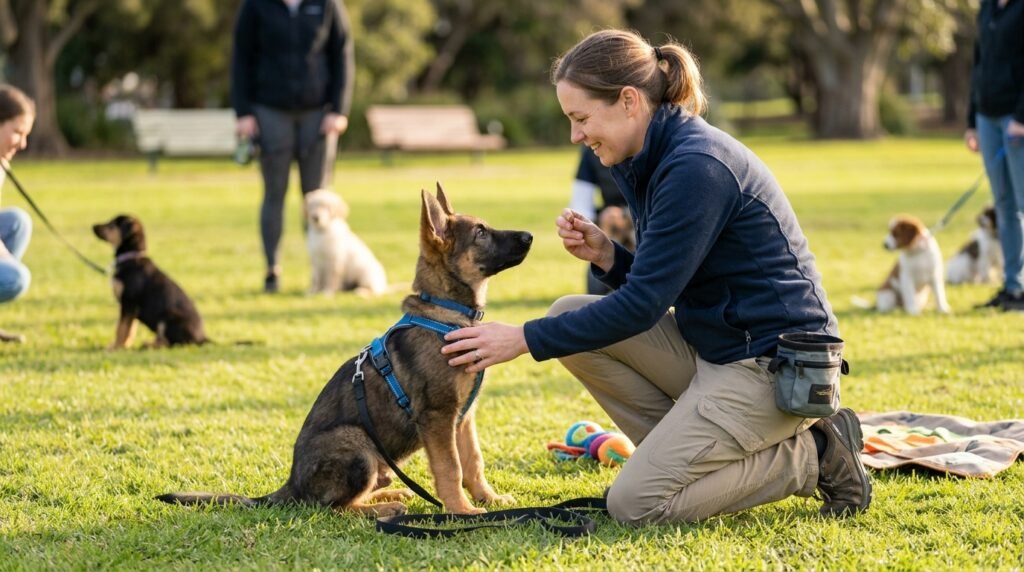
The 10 Most Common German Shepherd Behaviour Problems
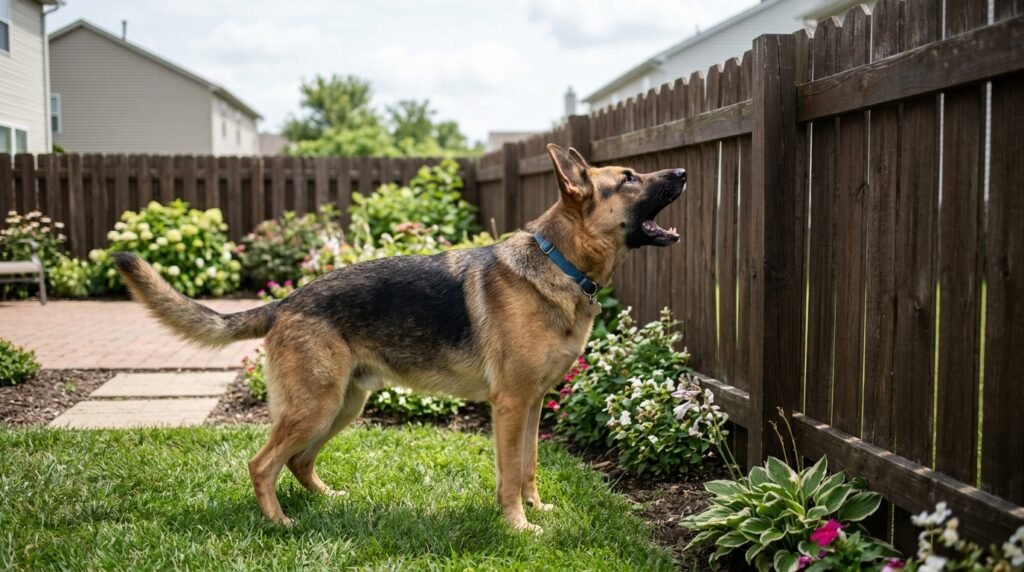
Overexuberant Barking is one of the top German Shepherd behavior problems faced by owners.
1. Overexuberant Barking
Why it happens: German Shepherds bark to warn you, to relieve boredom, or to show anxiety. Because of their guarding instinct, they are quick to sound the alarm at strangers, other dogs, or unfamiliar noises.
How to fix this:
- Teach a “quiet” command — wait for a break in barking, say ‘quiet’, then reward the silence.
- Identify the trigger — alert barking, boredom barking and anxiety barking each need a different solution.
- Increase daily exercise — a tired German Shepherd has much less reason to bark.
- Use desensitisation for trigger barking — gradually expose your dog to the stimulus at a low level and reward calm behaviour.
2. Aggression
Why it happens: Aggression in German Shepherds typically appears toward strangers, toward other dogs, or (rarely) toward family. Most aggression is not breed-related but is caused by poor socialisation, fear or pain.
How to fix this:
- Socialise early and often — pair each new meeting with treats.
- Learn to read body language — lowered head, tucked tail, pinned ears, growling are early warning signs.
- Work with a certified trainer who uses positive reinforcement.
- Rule out medical causes — pain is a common hidden trigger. See a vet if behaviour changes suddenly.
Note: German Shepherds are large, powerful dogs. Any sign of aggression should be addressed by a professional immediately.
3. Separation Anxiety
Why it happens: German Shepherds bond deeply with their owners. A GSD left alone may bark, pace, drool, or destroy furniture. Causes include sudden schedule changes and lack of alone-time training.
How to fix this:
- Practice gradual alone-time training — start with seconds out of sight, then increase slowly.
- Keep arrivals and departures calm — no dramatic goodbyes.
- Use enrichment toys — a frozen stuffed toy or puzzle feeder gives your dog something positive to do.
- Use a crate as a safe space, not a punishment — build positive associations first.
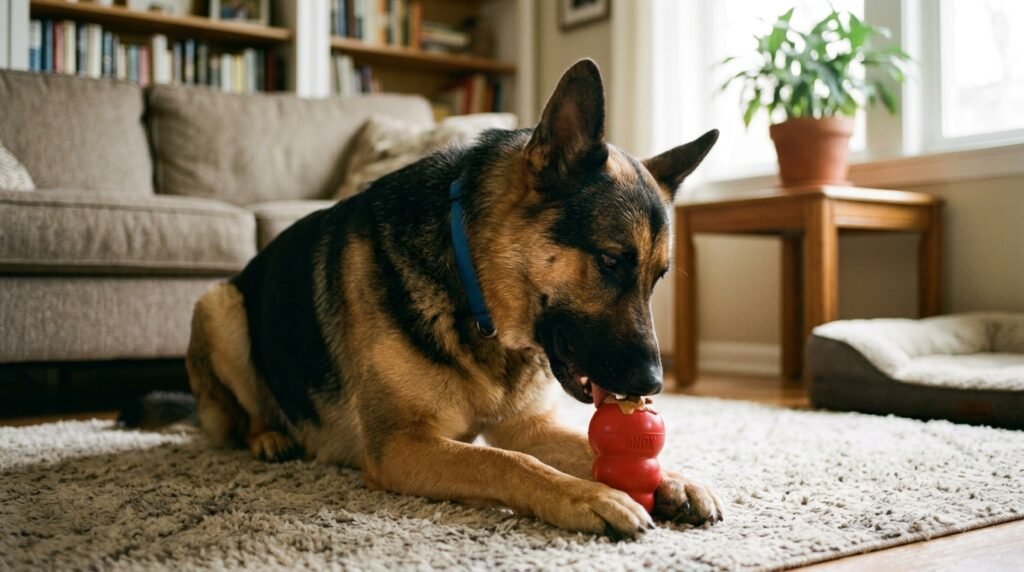
4. Destructive Chewing
Why it happens: Puppies chew due to teething; adult German Shepherds chew due to boredom, anxiety or insufficient exercise. Their powerful jaws mean damage adds up quickly.
How to fix this:
- Provide appropriate chew toys — durable, dog-safe chews satisfy the urge.
- Add mental stimulation — puzzle toys, training games and scent work tire the mind.
- Redirect, don’t just punish — replace forbidden items with an approved toy.
- Increase exercise — many chewing problems disappear with more physical activity.
5. Pulling on the Lead
Why it happens: German Shepherds are strong, driven and curious. Add a prey drive and the desire to investigate everything, and walks can become a tug-of-war.
How to fix this:
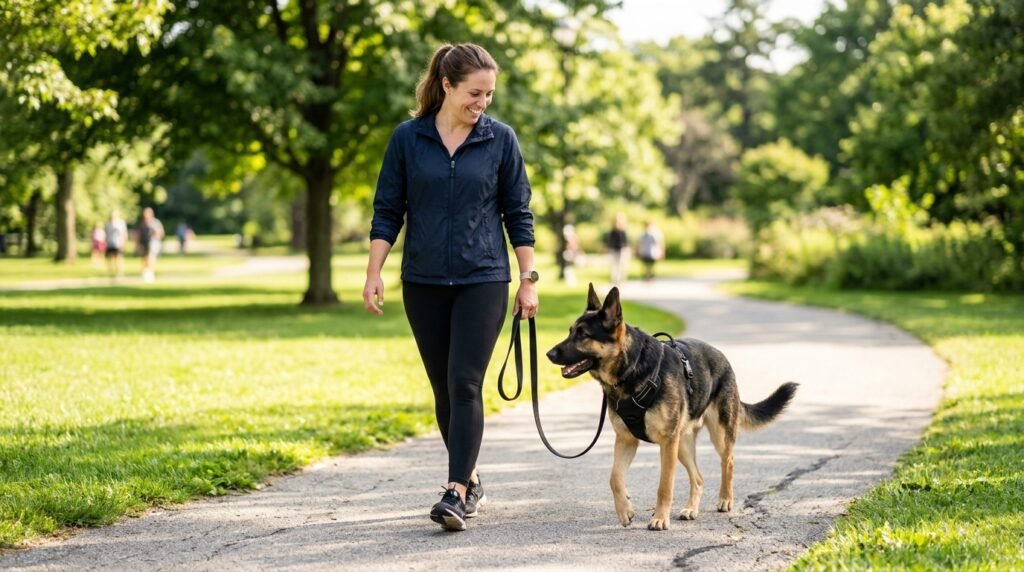
- Practice loose-leash walking — stop immediately when your dog pulls; resume only when the lead slackens.
- Use the correct equipment — a front-clip harness offers more control without choking.
- Reward walking at your side so your dog learns it pays to stay close.
- Be consistent — the same rules apply for everyone walking the dog.
6. Jumping Up at People
Why it happens: Jumping is mostly social excitement, not dominance. Your German Shepherd wants to be face-to-face with you, and jumping gets attention — even if the attention is “off!”
How to fix this:
- Use the ignore method — turn away and ignore until all four paws are on the floor.
- Reward calm greetings immediately when paws are down.
- Enforce a “four paws on floor” rule with all visitors.
- Teach an alternative behaviour — a solid “sit” is the polite way to greet people.
7. Resource Guarding
Why it happens: Some German Shepherds guard toys, food, or favourite resting spots out of fear of losing them. Signs include stiffening, growling or snapping when approached.
How to fix this:
- Play the trade-up game — trade the guarded item for a higher-value treat.
- Try hand-feeding meals to build trust and reduce food tension.
- Desensitise gradually — approach from a distance, reward calm behaviour, then close the gap slowly.
- Never punish guarding — punishment increases fear and makes it worse. Seek professional help for serious cases.
8. Excessive Digging
Why it happens: Digging can be a response to boredom, instinct or a need to cool off in hot weather. An unsupervised yard is an open invitation for a working breed with energy to burn.
How to fix this:
- Set up a designated dig zone — a sandbox where digging is allowed and rewarded.
- Increase exercise and enrichment — a well-exercised GSD digs far less.
- Supervise outdoor play to prevent habits from forming.
- Provide shade and water — if your dog digs to cool off, shade solves the problem.
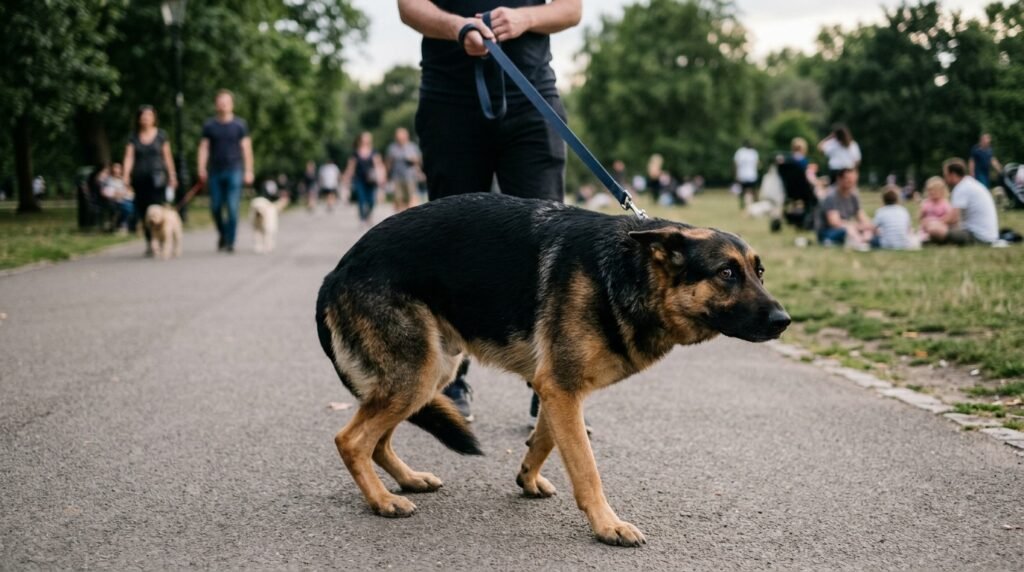
9. Fear and Reactivity
Why it happens: Fearful German Shepherds may bark, lunge or freeze when triggered by strangers, loud noises or other dogs. Typical signs are a tucked tail, pinned ears and a lowered body.
How to fix this:
- Use counter-conditioning — pair the scary trigger with high-value treats at a safe distance.
- Expose gradually and calmly — flooding a fearful dog with triggers rarely works.
- Avoid punishment — punishing a fearful dog increases fear and can create aggression.
- Watch body language — recognise early stress signals and create distance before the threshold is reached.
10. Herding Nips
Why it happens: Herding is part of the breed’s genetic makeup. With no livestock to work, a German Shepherd may “herd” children or guests by circling and nipping at heels.
How to fix this:
- Redirect to toys — channel the herding drive into fetch, tug or a flirt pole.
- Calmly stop the behaviour, then give an acceptable outlet immediately.
- Use structured play with rules to satisfy instincts in a healthy way.
- Supervise children — tell kids not to run and shriek, as it triggers the chase-and-nip reflex.
The Bottom Line: Most Problems Are Preventable
German Shepherds are not problem dogs — they are working dogs without a job. The vast majority of the behaviours on this list can be traced back to the same few unmet needs: exercise, mental stimulation, early socialisation, and consistent clear training.
Start with the fundamentals. Give your dog enough physical activity, stimulate their mind with toys and training, reward the behaviours you want, and be patient. Most owners notice real improvement within weeks when following a consistent routine.
Know when to reach out for help. If your German Shepherd is showing aggression, severe anxiety, or guarding that doesn’t respond to home training, work with a certified, positive-reinforcement trainer or a veterinary behaviorist.

Frequently Asked Questions
When do German Shepherd behaviour issues usually start?
Many problems occur in puppyhood and adolescence — approximately between 4 and 18 months — when energy is high and training is still developing. Early socialisation before 16 weeks of age is the best prevention.
Are German Shepherds naturally aggressive?
No. Most aggression stems from poor socialisation, fear, or pain. However, they are large and powerful dogs, so their behaviour must be managed carefully and addressed early.
How much exercise do German Shepherds need to prevent behaviour problems?
Most healthy adult German Shepherds need at least 1–2 hours of physical activity every day, plus mental stimulation from training, puzzle toys or scent games. Under-exercised GSDs are far more likely to bark, chew, dig and act out.
Can I fix my German Shepherd’s behavior issues at home?
You can resolve many common problems — jumping, mild barking, leash pulling and chewing — at home with consistent positive reinforcement. Serious resource guarding, aggression, or severe separation anxiety require a professional trainer or veterinary behaviorist.
Why is punishment-based training discouraged for German Shepherds?
Animal behaviorists warn against dominance and punishment-based methods, which can create fear and actually encourage aggression. Positive reinforcement builds trust and delivers longer-lasting results.