The best food for Labrador puppies is high-quality large- or medium-breed puppy food. Labrador puppies should be fed four times a day from 8 weeks to 3 months, three times a day from 3-6 months and twice a day after 6 months. Controlled feeding is essential; too much too soon can lead to overgrowth of the bones, obesity and future joint issues in Lab puppies.
The joy of having a Labrador puppy at home is one of the greatest joys in life. Clumsy, excitable and very loving. After the initial excitement, questions begin to come in, and feeding is typically the first one. What to feed a Lab puppy? How much? How often? Which brands really provide a good value?
This guide provides answers to all those questions. It explains the various types of food available, how to select the most suitable food, how much food to give your Lab puppy at each age, and some common feeding pitfalls.
Related: Purina Pro Plan vs Royal Canin | Best Pet Food for Dogs
Why the Best Food for Labrador Puppies Matters So Much
Labrador Retrievers are a large breed, and this is important for feeding. Rapid, uncontrolled growth is more likely to be a problem in large breed puppies than in smaller dogs. If a Lab puppy grows too quickly, typically caused by over-feeding, it can cause low-density bones, skeletal deformities and contribute to the already prevalent hip dysplasia and elbow dysplasia. That’s why you must choose the best food for Labrador puppies in the first year of their life.
Another reason to pay special attention to nutrition with Labs is that they are notorious eaters. According to veterinary experts at Greathearted, vets even have a nickname for overweight Labs — “Labradors.” This is a very common condition in the breed and can be a serious problem. Maintaining a healthy weight for your Labrador Retriever can extend their life by up to 2 years.
What Types of Food Can You Feed a Labrador Puppy?
There are four choices: dry food, wet food, raw food and home-cooked food. Most owners prefer dry kibble, and they are usually the most suitable option for a puppy’s critical growth stage. Dry kibble is nutritionally complete, easy to portion, and easy to store.
- Older dogs may eat wet food in addition to kibble.
- Raw food (BARF) is growing in popularity, but must be researched to balance nutrition during rapid growth.
- Home-cooked food has similar nutritional completeness challenges as raw feeding.
There is no scientific evidence to suggest that one feeding method is definitely superior to the other. The key is that the food is of good quality, suitable for your puppy’s life stage and the correct portion size. In either case, try to get the best food for Labrador puppies in that category, as raw and home-cooked diets require the time and knowledge to provide all the nutritional components, while kibble is more convenient for most first-time Lab owners.
How to Choose the Best Food for Labrador Puppies
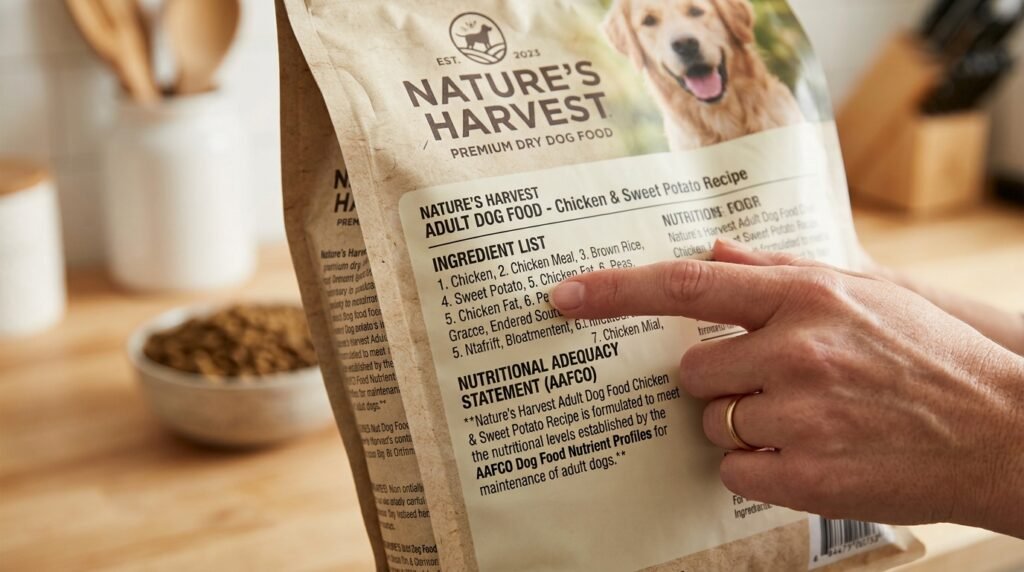
The first step to selecting the best food for Labrador puppies is to know what is in the bag. The right kibble is formulated for large or medium breeds, lists a named protein as the first ingredient, includes the AAFCO “complete and balanced” statement, and has minimal filler carbohydrates.
Does the food come in a large or medium-sized puppy formula? Non-negotiable. These formulas promote gradual and steady weight gain rather than the quick weight gain that can stress developing joints.
What are the first ingredients? Seek out a protein source, such as chicken, beef, salmon or lamb, instead of grain fillers or unmentioned “meat by-products.
What percentage of filler does it have? Premium brands contain more protein and healthy fats, and less filler carbs. Others may substitute legumes, such as lentils and chickpeas, for grains, which can be easier on the stomach.
Is it labelled with an AAFCO statement? This indicates that the formula is nutritionally complete for puppies.
If you can get these four factors right, you’ve got the best food for your Labrador puppy, no matter which brand you select.
Best Food for Labrador Puppies by Age
The best food for Labrador puppies isn’t a single fixed formula — it changes as your puppy grows. Here’s a quick breakdown of what to prioritize at each stage:
8-12 weeks: A large-breed starter puppy formula, diluted a bit with water to make it easier to chew.
3-6 months: Continue using the same large-breed puppy food, but increase the amount as your puppy grows.
6–12 months: Feed the best food for Labrador puppies formula, but decrease the number of meals.
12+ months: Start to switch to an adult large-breed formula
How Much Should You Feed a Labrador Puppy?
The wrong amount of food can negate the effects of the best food for Labrador puppies. The manufacturer’s feeding guide is a good reference but should not be used as a prescription. Use in conjunction with frequent visual inspections:
- By around three months, your Labrador puppy should have a visible waist from above.
- If your puppy looks round, reduce portions.
- If ribs are clearly visible, increase portions.
- When in doubt, ask your veterinarian
Avoid leaving food out all day — structured mealtimes are essential for healthy weight management in this breed.
How Often Should You Feed a Labrador Puppy?
Labrador puppies should be fed four times a day from 8 weeks to 3 months, three times a day from 3 to 6 months, and twice a day from 6 months onward.
| Age | Meals Per Day |
| 8 weeks – 3 months | 4 meals per day |
| 3 months – 6 months | 3 meals per day |
| 6 months onward | 2 meals per day |
According to The Labrador Site, a sample schedule for an 8-week-old puppy might look like 7 am, 11 am, 3 pm, and 7 pm — shifting to roughly 8 am, 1 pm, and 6 pm by 12 weeks. Avoid feeding too close to bedtime; a four-hour gap before sleep reduces the chance of a 2 am bathroom trip.
What Foods Should Labrador Puppies Avoid?
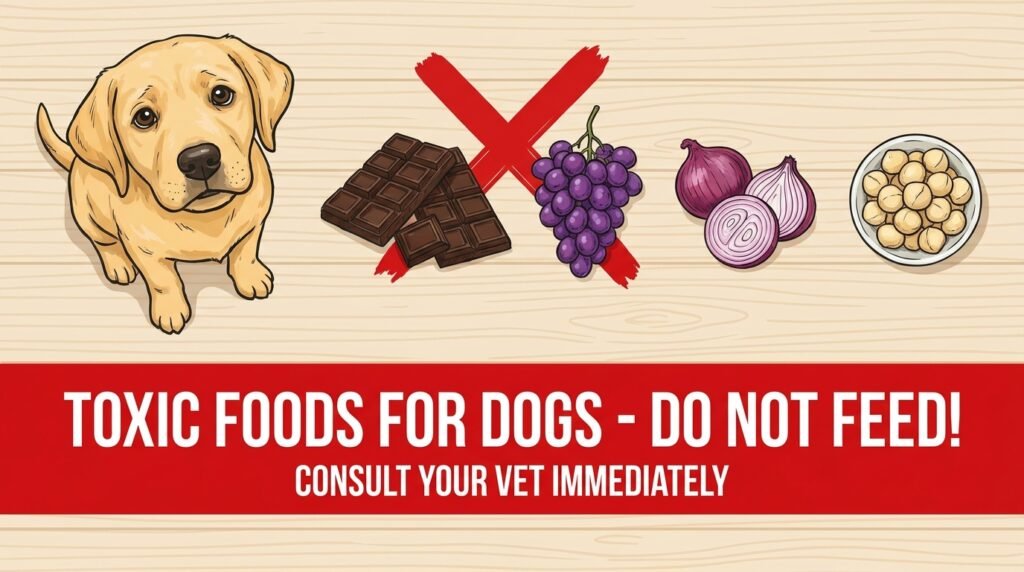
Even the best food for Labrador puppies can’t protect against these common household hazards, so keep them out of reach at all times:
- Chocolate — contains theobromine, toxic to dogs.
- Grapes and raisins can cause acute kidney failure.
- Onions and garlic — damage red blood cells
- Xylitol — found in gum and some nut butters, highly toxic
- Macadamia nuts — cause neurological symptoms
- Cooked bones can splinter and cause internal injury.
- Alcohol and caffeine — dangerous even in small amounts
If you suspect your puppy has ingested something toxic, contact your veterinarian immediately.
When Should You Switch a Labrador Puppy to Adult Food?
Most manufacturers recommend feeding puppy-specific formulas until around 12 months of age. Some breeders switch earlier, but typically not before six months, since adult formulas aren’t calibrated for a growing large-breed puppy’s needs. Once your puppy transitions off the best food for Labrador puppies formula, mix the new adult food with the existing puppy food over 7–10 days to avoid digestive upset.
Final Thoughts on Choosing the Best Food for Labrador Puppies
The best food for Labrador puppies is not a difficult decision to make, but it does need to be consistent. Use a high-quality formula designed for large-breed puppies, feed at regular times, and don’t overfeed, even if your Lab looks like he is hungry.
These early habits will affect not only your puppy’s growth, but also their aging. A well-balanced, healthy Labrador with a proper weight is at less risk of developing joint problems and obesity. When in doubt, it’s always a good idea to visit your veterinarian for a consultation.
For more breed-specific guidance, see our Best German Shepherd Food guide.
Frequently Asked Questions About Feeding Labrador Puppies
Q: What is the best food for Labrador puppies?
A: Labrador puppies will do best on a high-quality medium-to-large breed puppy food in a dry kibble. It is completely nutritionally balanced, convenient to feed and highly recommended by veterinarians.
Q: How many times a day should I feed my Labrador puppy?
A: Four times a day from 8 weeks to 3 months, three times a day from 3 to 6 months, and twice a day from 6 months onward.
Q: How do I know if I’m feeding my Labrador puppy the right amount?
A: Start with the manufacturer’s instructions and assess body condition. A well-fed Lab puppy should show a waist at about 3 months of age; ribs should be felt but not seen.
Q: Can my Labrador puppy eat adult dog food?
A: Not before at least six months, and most recommendations suggest staying on puppy food until 12 months.
Q: Why does my Labrador puppy always seem hungry?
A: This is normal Lab behavior. Don’t increase portions just because your puppy seems unsatisfied — follow feeding guidelines and consult your vet.
A: Can Labrador puppies eat the following human foods?
The following foods should be avoided: Chocolate, grapes, raisins, onions, garlic, xylitol, macadamia nuts, cooked bones.
Which is better for Labrador puppies, kibble or raw food?
A: No definitive evidence; raw is categorically better. Kibble suits owners who want convenience and nutrition that is backed by vets; raw suits those who want to do some research to find out how to get the proper balance.
When choosing a puppy food label, you should check the following:
A: A named protein source as the first ingredient, a large/medium breed-specific formulation and an AAFCO “complete and balanced” statement.