
Quick answer: Cats are hardwired to hide pain and sickness, which makes it hard for owners to catch health problems early. Watch for changes in appetite, litter box habits, grooming, coat condition, breathing, and behavior. If your cat shows any of these signs of cat illness, talk to a vet promptly — catching things early can make all the difference.
Cats are experts at masking how they feel — not out of stubbornness, but instinct. Their wild ancestors couldn’t afford to look weak in front of predators or rivals, and that same survival wiring is still very much alive in the cat curled up on your couch. The result: your cat could be dealing with a real health problem long before you notice anything unusual.
This is exactly why cat owners have it tougher than dog owners in some ways. Dogs tend to make discomfort obvious. Cats suffer quietly, and by the time a symptom is impossible to miss, the underlying issue may already be well established.
Learning to spot the early signs of cat illness — before they turn into something serious — is one of the most valuable skills any cat parent can build. This guide walks through the behavioral shifts, physical symptoms, and true emergencies every owner should recognize, plus simple ways to keep tabs on your cat’s health at home.
Why Cats Are So Good at Hiding Illness
In the wild, cats occupy a strange middle ground — they hunt smaller animals but are hunted by bigger ones. Any visible sign of weakness makes them a target, so evolution favored cats that could mask pain convincingly. That instinct didn’t disappear just because dinner now shows up in a bowl.
For many illnesses, the earliest visible change is subtle: your cat sleeping a bit more, going quiet, or wanting less attention. It’s easy to mistake this for a mood swing. As VCA Animal Hospitals explains, cats are frequently far sicker than they appear by the time an owner starts to suspect something is wrong.
That’s part of why the American Veterinary Medical Association recommends twice-yearly wellness visits for adult cats. A trained vet can catch subtle clinical clues that even a very attentive owner might miss in day-to-day life.
Behavioral Signs of Cat Illness
Appetite or Thirst Changes
Any noticeable shift in eating or drinking is worth paying attention to. Dental pain can make a cat picky or hesitant around food. Conditions like diabetes or an overactive thyroid often push cats to eat and drink more than usual, while kidney or liver trouble tends to do the opposite — appetite drops while thirst climbs.
One rule matters more than any other: if your cat goes roughly 24 hours without eating, don’t wait it out. Cats that stop eating are at risk of hepatic lipidosis, a dangerous condition where fat builds up in the liver and appetite loss spirals further — sometimes requiring weeks of intensive treatment to reverse.
If this sounds familiar, our story on what to do when your cat stops eating overnight walks through a real case and what steps helped.
Lethargy and Unusual Hiding
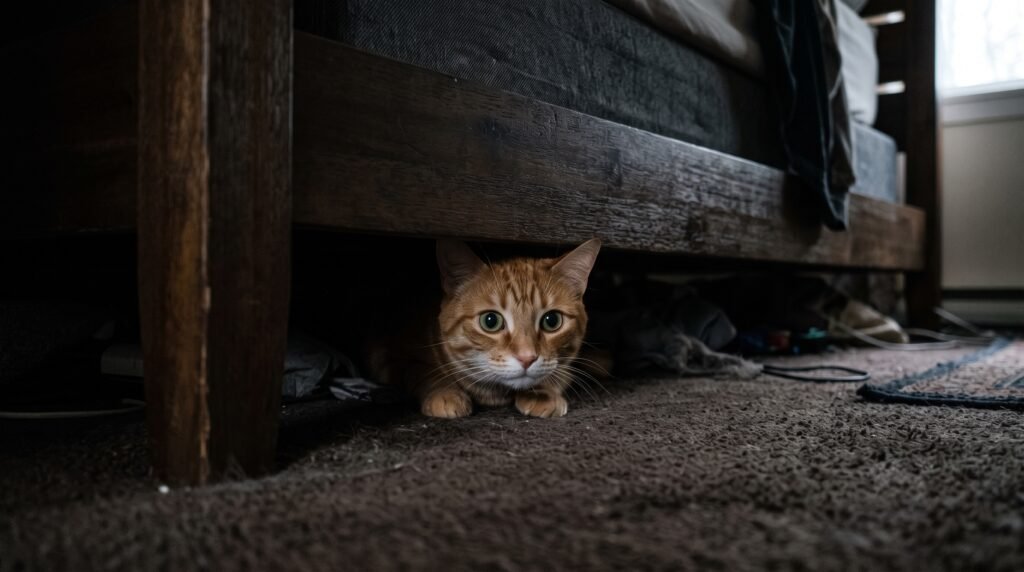
A cat that isn’t feeling well usually pulls back — sleeping more, playing less, and retreating to closets, under furniture, or other out-of-the-way spots. This withdrawal is often one of the very first clues something’s wrong, sometimes appearing well before any physical symptom shows up.
Not every cat reacts identically, though. Some become extra clingy when unwell, while others turn irritable. What matters isn’t the specific behavior — it’s any noticeable change from your cat’s usual baseline.
Sudden Aggression or Irritability
A normally easygoing cat that suddenly hisses, swats, or bites when touched is often communicating pain rather than acting out of nowhere. Cats guarding a sore spot — from arthritis, an internal issue, or bladder discomfort — will often react defensively to handling they used to tolerate without a fuss.
Unusual Vocalization
Cats with an overactive thyroid tend to become more vocal, especially overnight, and may seem restless. Older cats that suddenly start crying out or yowling may be dealing with cognitive decline, pain, or disorientation. Any noticeable, out-of-character change in vocalization deserves a vet visit.
Physical Signs of Cat Illness
Litter Box Changes
Few things reveal as much about a cat’s health as their litter box habits. Both diarrhea and constipation point to underlying issues — small, hard, dry stools are never something to shrug off, as they’re often an early sign of kidney trouble.
Urination deserves the same attention. Producing more urine than usual can point to kidney or liver disease, or diabetes. Producing less — especially with straining, frequent trips to the box, or excessive licking near the genitals — may signal a urinary blockage. A complete inability to urinate is a life-threatening emergency and needs immediate care.
Vomiting or Diarrhea
An occasional hairball is normal; repeated vomiting is not. Be especially concerned about vomit that’s clear, foamy, or tinged with bile, particularly alongside lethargy or appetite loss — this combination can point to gastrointestinal disease, toxin exposure, or organ failure. Ongoing diarrhea drains hydration fast and may point to infection, parasites, or inflammatory bowel disease.
Weight Loss or Gain
Thanks to their fur, cats can lose a surprising amount of weight before it’s visually obvious. Get in the habit of running your hands along your cat’s ribs and spine — you should feel them without them feeling sharp or prominent. If they do, weight loss may already be underway.
Sudden weight loss, especially in a previously overweight cat, often signals a metabolic issue like diabetes or hyperthyroidism. Weight gain — particularly a swollen abdomen — can point to fluid buildup, usually a sign of more serious illness underneath.
Coat and Fur Condition
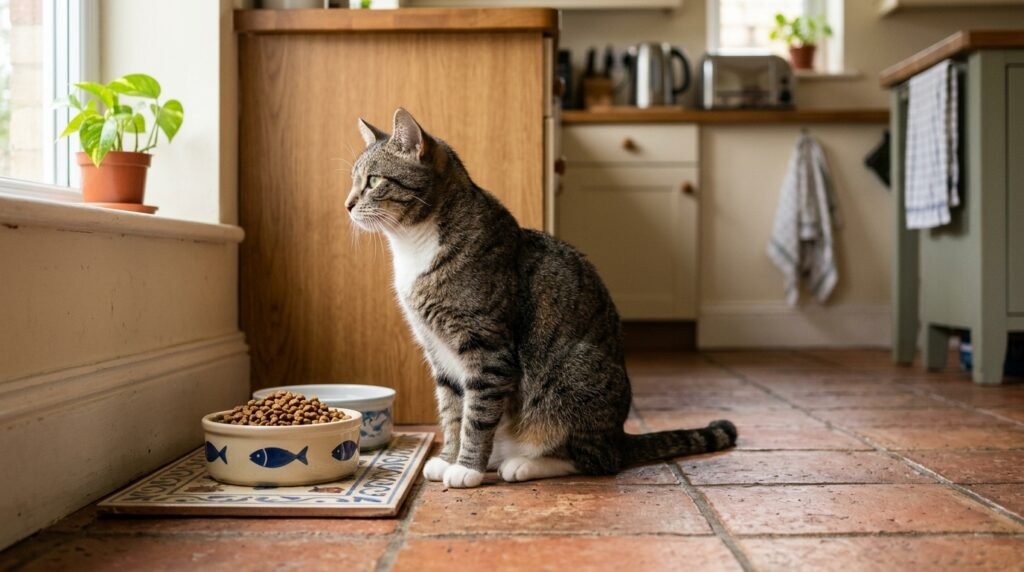
A healthy coat looks smooth and clean with little odor. When cats feel unwell, grooming often falls by the wayside — the coat turns greasy, dull, or matted, with more dandruff or shedding than usual.
The opposite extreme is worth watching too. Grooming obsessively, especially in one concentrated spot, can point to allergies, parasites like fleas or mites, localized pain such as arthritis, or even stress. Bald patches or raw, irritated skin beneath over-groomed fur are a clear signal to get checked out.
Bad Breath and Dental Problems
Cats shouldn’t have noticeably bad breath. A strong mouth odor often points to dental disease — the single most common health issue in adult cats — while an ammonia-like smell can signal kidney disease. Unusual odors anywhere on the body, including the ears or rear end, are worth investigating too.
Respiratory, Eye, and Nose Symptoms
Sneezing and Nasal Discharge
An occasional sneeze is harmless. Frequent sneezing paired with nasal discharge suggests an upper respiratory infection, something lodged in the nose, or — in longer-running cases — polyps or tumors. Any nasal discharge in an otherwise healthy cat is abnormal and worth a check.
Eye Discharge or Cloudiness
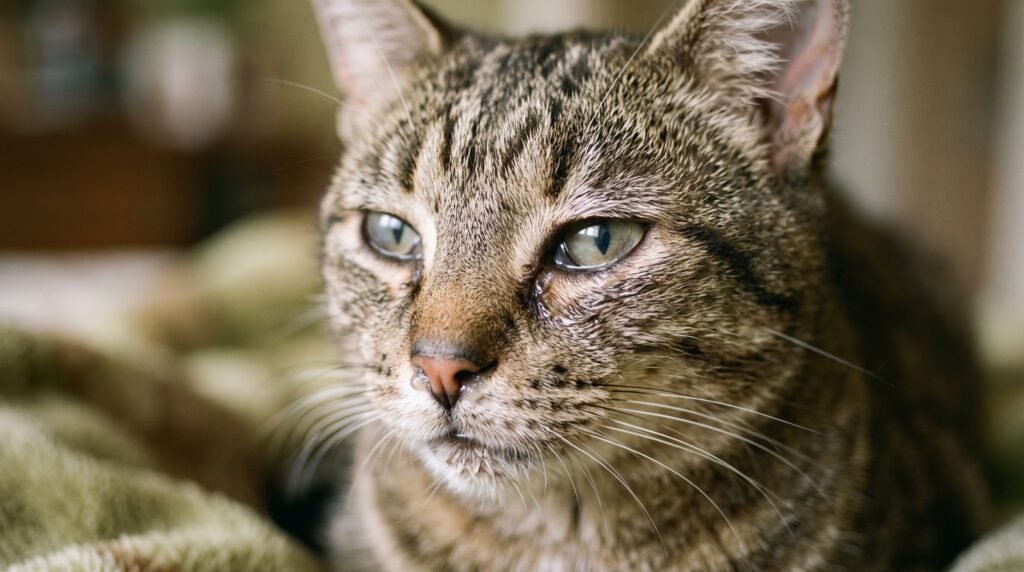
Watch for drooping eyelids, squinting, or discharge in shades of green, yellow, or white. Cloudy or hazy eyes, pupils of noticeably different sizes, or a visible third eyelid at the corner of the eye are all signs something’s off. Eye issues can worsen quickly, so don’t delay a vet visit.
📷 IMAGE PLACEHOLDER — Respiratory/Eye Symptoms section | Prompt: “Close-up of a cat\u2019s face with slightly watery, cloudy eyes and mild nasal discharge, soft blurred background, realistic photography” | Alt text: “Close-up of cat with eye discharge, a sign of cat illness”
Labored Breathing
Normal breathing in cats is quiet and effortless. Shallow breaths, open-mouth breathing, panting, or visible strain with each breath are serious red flags. A cat struggling to breathe may stretch its head and neck forward and seem unable to settle. Treat this as an emergency — don’t wait to see if it passes.
Grooming Habit Changes as a Warning Sign
As covered above, a shift in grooming — in either direction — tells you something important. A cat that’s always kept itself immaculate but suddenly stops is signaling a change. A cat that grooms so compulsively that bald patches appear is communicating just as clearly, from the opposite end.
Both extremes deserve a closer look. The cause could be physical illness, pain, or anxiety, and figuring out which one is key to proper treatment. Note when the change started and whether other symptoms appeared around the same time — that detail will help your vet a great deal.
Emergency Signs: When to See a Vet Immediately
Some symptoms can’t wait for a routine appointment. Seek emergency veterinary care right away if you notice:
- No urination for 12–24 hours, especially with straining or visible discomfort
- Open-mouth breathing, panting, or labored breaths
- Sudden inability to use the hind legs
- Collapse or extreme weakness
- Seizures
- Pale, yellow, or bluish gums (each shade points to a different serious issue — anemia, jaundice, or oxygen deprivation)
- No food intake for more than 24 hours
- Suspected exposure to something toxic
- Trauma, such as being hit by a vehicle or a fall from height
- Repeated vomiting, especially with blood or unusual coloring
- Sudden eye changes, like cloudiness or mismatched pupils
When in doubt, act quickly. Even a short delay with these symptoms can turn fatal.
📷 IMAGE PLACEHOLDER — Emergency Signs section | Prompt: “A veterinarian in scrubs gently examining a cat on an exam table, calm clinical setting with warm lighting, realistic photography” | Alt text: “Veterinarian examining a cat for emergency signs of illness”
How to Monitor Your Cat’s Health at Home
You don’t need medical training to be an effective first line of defense — just consistency.
Build a weekly habit. Run your hands over your cat from head to tail, feeling for lumps, sore spots, unusual warmth, or changes in muscle. Check the ears, eyes, mouth, and coat while you’re at it, and keep track of their weight over time.
Pay attention to eating and drinking. Get a rough sense of your cat’s normal daily intake so you’ll notice if it shifts significantly in either direction.
Watch the litter box. Frequency, volume, color, and texture of urine and stool all provide useful health data over time. With multiple cats, separate litter boxes make it easier to track each one individually.
Keep a simple log. Jotting down odd behaviors, appetite shifts, or physical changes — even briefly — can be genuinely useful at vet appointments. Patterns that look minor day to day often become obvious once you look back over a few weeks.
Don’t skip routine visits. The AVMA’s twice-yearly wellness exam recommendation exists because vets catch what home monitoring can’t — bloodwork, weight trends, dental checks, and a full physical exam from a trained professional.
Final Thoughts: Early Detection Saves Lives
Cats keep their pain private. It isn’t personality — it’s a survival trait built over thousands of years. For the humans who care for them, though, it means staying alert, knowing your cat’s normal baseline, and trusting your instincts the moment something feels different.
You don’t need to be a vet to catch the signs of cat illness early. You just need to pay attention. Regularly checking your cat’s eating habits, behavior, coat, and litter box gives you the information you need to catch a problem while it’s still manageable. If something feels off — even if you can’t quite explain it — make the call.
Your vet isn’t just there to treat sickness. They’re your partner in preventing it.
Frequently Asked Questions
How can I tell if my cat is in pain?
Cats rarely vocalize pain the way people expect. Instead, look for a hunched posture, reluctance to be touched in a certain spot, reduced grooming, hiding, appetite loss, tense facial expressions like squinting, and reluctance to jump. Some cats become defensive or snappy when handled while in pain. Any unexpected behavior change is worth considering as a possible pain response.
What are the most common signs of cat illness?
The most frequently reported signs include changes in appetite or thirst, altered litter box behavior, lethargy, hiding, vomiting, diarrhea, weight loss, a deteriorating coat, and discharge from the eyes or nose. New irritability or unusual vocalization often show up early too.
How long can a cat go without eating before it’s dangerous?
Cats that refuse food for more than about 24 hours risk developing hepatic lipidosis, a serious condition where fat builds up in the liver and appetite loss worsens over time. If your cat hasn’t eaten in over a day, book a vet visit right away rather than waiting to see if it passes.
When should I go to an emergency vet instead of a regular appointment?
Head to an emergency clinic for difficulty breathing, inability to urinate, collapse, seizures, unresponsiveness, suspected poisoning, pale or bluish gums, or trauma. A regular appointment works for gradual appetite changes, occasional vomiting without blood, coat changes, or mild behavior shifts without other symptoms. If you’re not sure which applies, call your vet or an emergency line and describe what you’re seeing.
How often should cats see a vet?
The AVMA recommends twice-yearly wellness exams for adult cats, with more frequent visits for kittens and seniors. These checkups let vets catch early-stage problems long before they’re visible at home.
Can indoor cats still get sick?
Yes. Staying indoors doesn’t make a cat immune to illness. Indoor cats commonly develop dental disease, obesity, kidney disease, hyperthyroidism, diabetes, urinary issues, and various infections. They may avoid some risks outdoor cats face, but they still need regular veterinary care and consistent monitoring.