TL;DR: The best pet food for dogs meets their life-stage nutritional needs, lists a named animal protein as the first ingredient, and avoids artificial fillers and by-products. Key factors include protein content (18–25% minimum for adults), fat balance, and the absence of harmful additives. Always consult your veterinarian before making significant dietary changes.
Choosing what to feed your dog sounds simple — until you’re standing in a pet store aisle faced with 40 different brands, each claiming to be the healthiest, most natural, or most scientifically advanced option on the market. It’s overwhelming, and the stakes feel high. Because they are.
What your dog eats directly affects their energy levels, coat condition, digestive health, immune function, and longevity. Poor nutrition can contribute to obesity, joint problems, dull coats, and chronic disease. Great nutrition, on the other hand, can add years of healthy, active life to your dog’s timeline.
So in this guide, we’ll walk through exactly what makes the best pet food, how to decode ingredient labels, which food types suit different dogs, and how to match your dog’s diet to their life stage and budget.
What Makes Pet Food “The Best” for Dogs?
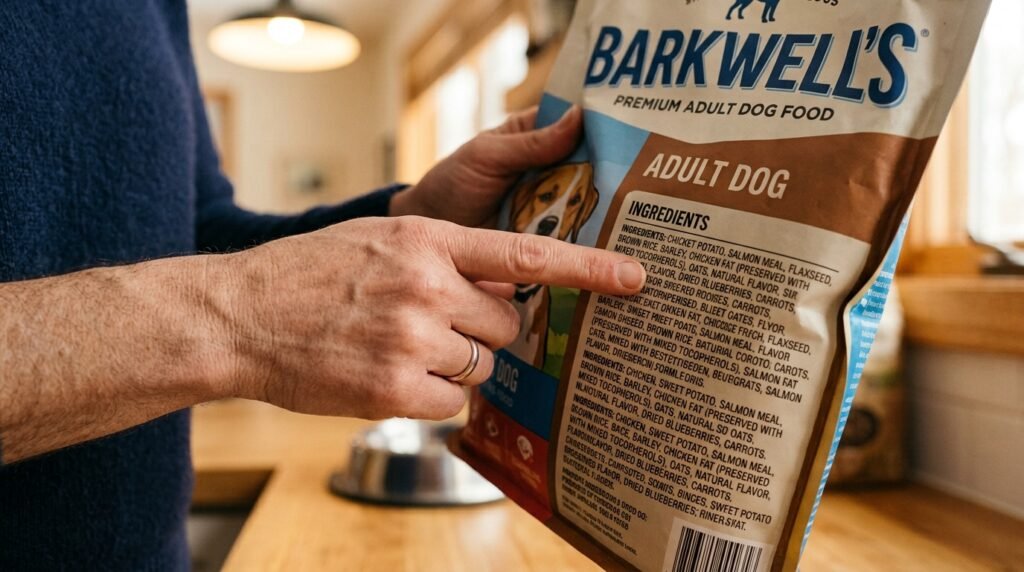
The best pet food isn’t defined by price or marketing claims. Instead, it’s defined by nutritional completeness — and that starts with understanding what dogs actually need to thrive.
What are the key nutritional requirements in quality dog food?
Dogs are omnivores with a strong biological preference for animal protein. According to the Association of American Feed Control Officials (AAFCO), a nutritionally complete adult dog food must meet minimum standards across several core nutrients:
- Protein: At least 18% on a dry matter basis for adult dogs. Protein supports muscle maintenance, immune function, and cell repair. Named sources like chicken, beef, salmon, or lamb are preferred over vague terms like “meat meal.”
- Fats: A minimum of 5% fat for adults, with higher requirements for puppies. Healthy fats — especially omega-3 and omega-6 fatty acids — support brain function, coat health, and inflammation control.
- Fiber: Supports digestive regularity and gut microbiome health. Ingredients like sweet potato, brown rice, and beet pulp are good sources.
- Vitamins and minerals: Calcium and phosphorus ratios matter significantly for bone development, particularly in puppies and large breeds. Vitamins A, D, E, and B-complex are all essential.
An AAFCO “complete and balanced” statement on a label means the food has been formulated to meet these standards — or has passed feeding trials. That label is your baseline check before buying.
Types of Best Pet Food Options for Dogs
There’s no single best format for every dog. The right choice depends on your dog’s preferences, health status, and your lifestyle. Here’s a breakdown of the four main types.
Dry kibble
Dry food is the most popular and convenient option. It’s cost-effective, easy to store, and supports dental health through mechanical chewing action. High-quality kibble — like those from brands such as Orijen, Purina Pro Plan, or Hill’s Science Diet — can deliver complete nutrition. The downside: lower moisture content (around 10%), which can be a concern for dogs prone to urinary issues.
Wet food
Canned or wet food contains 70–80% moisture, making it ideal for dogs who struggle to stay hydrated, are recovering from illness, or are picky eaters. It’s typically more palatable and easier to digest. However, wet food is significantly more expensive per serving than kibble.
Raw diet (BARF)
The Biologically Appropriate Raw Food (BARF) diet consists of raw meat, bones, organs, fruits, and vegetables. Advocates point to benefits like improved coat quality and higher energy. That said, the American Veterinary Medical Association (AVMA) warns against raw diets due to risks of bacterial contamination and nutritional imbalance if not carefully managed.
Freeze-dried food
Freeze-dried food removes moisture while preserving nutrients, offering a middle ground between raw and kibble. It’s nutrient-dense and minimally processed, but comes at a premium price. Brands like Stella & Chewy’s and Primal are well-regarded in this space.
Quick pick guide: choose dry kibble if convenience and cost are your top priorities, choose wet food if your dog needs more hydration or has dental issues, and choose freeze-dried if you want raw-diet benefits with reduced safety concerns.
How to Read Pet Food Labels
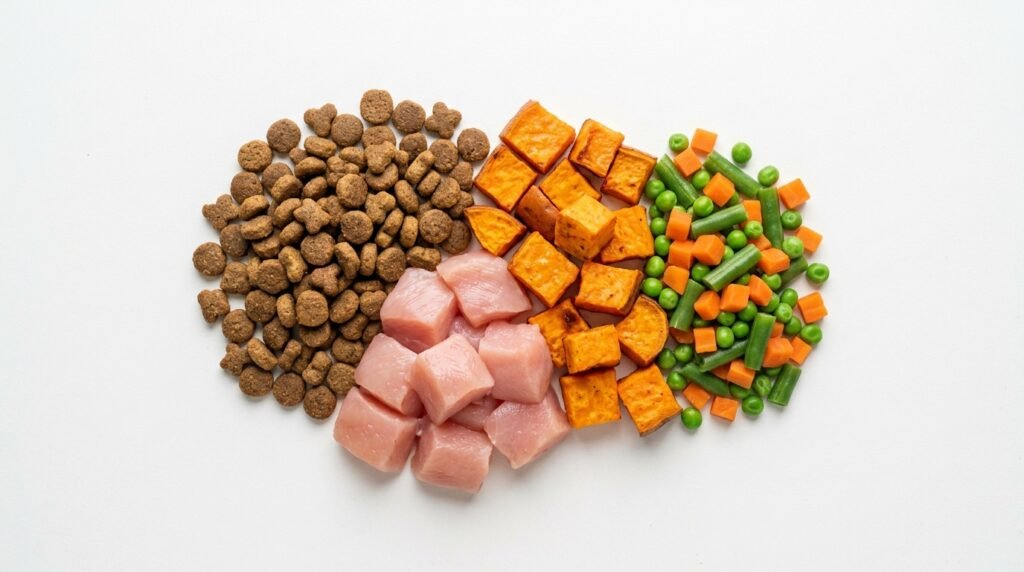
Labels are where marketing meets reality — and knowing what to look for separates good food from clever packaging.
What ingredients should appear in quality dog food?
- A named animal protein as the first ingredient (e.g., “deboned chicken,” “salmon,” “beef”)
- Whole food carbohydrates like brown rice, sweet potato, or oats
- Named fat sources such as chicken fat or salmon oil
- Natural preservatives like mixed tocopherols (vitamin E) or rosemary extract
What ingredients should you avoid in dog food?
- Generic “meat by-products” or unnamed protein sources
- Artificial preservatives like BHA, BHT, and ethoxyquin
- Corn syrup or added sugars, which contribute to obesity
- Artificial colors (Red 40, Yellow 5) — these serve no nutritional purpose
- Excessive fillers like corn or wheat gluten as primary ingredients
Keep in mind that the ingredients list is ordered by weight before cooking. So a food that lists chicken first but then follows with four grain ingredients may not actually be high in animal protein overall.
Best Pet Food by Life Stage
A one-size-fits-all approach doesn’t work in dog nutrition. Puppies, adults, and senior dogs have meaningfully different requirements.
What should puppies eat for healthy development?
Puppies need 22–28% protein and 8–17% fat on a dry matter basis, according to AAFCO puppy standards. Calcium and phosphorus ratios are critical — too much calcium in large-breed puppies can cause skeletal problems. Look for food labeled “for growth” or “all life stages,” and choose large-breed puppy formulas for dogs expected to exceed 50 lbs.
What nutritional needs do adult dogs have?
Adult dogs (typically 1–7 years, depending on breed) need consistent, balanced nutrition to maintain healthy weight and organ function. The 18% protein minimum applies here. Avoid overfeeding — obesity is the most common nutrition-related health issue in adult dogs, affecting roughly 56% of dogs in the US, according to the Association for Pet Obesity Prevention.
How does a senior dog’s diet differ from an adult dog’s?
Senior dogs (generally 7+ years) often benefit from:
- Reduced calorie density to prevent weight gain as activity levels drop
- Higher-quality, easily digestible protein to maintain muscle mass
- Added glucosamine and chondroitin for joint support
- Lower sodium for dogs with heart or kidney concerns
Best Pet Food for Special Health Conditions

Some dogs need tailored nutrition to manage ongoing health issues. In these cases, veterinary guidance is essential — but here’s what to know as a starting point.
What is the best dog food for allergies?
Food allergies in dogs most commonly involve proteins — beef, dairy, and wheat are frequent culprits. Limited-ingredient diets (LIDs) that feature a single novel protein (e.g., venison, duck, or rabbit) and a single carbohydrate source can help identify and manage triggers. Hydrolyzed protein diets, where proteins are broken into fragments too small to trigger an immune response, are another vet-recommended option.
What should dogs with sensitive stomachs eat?
Highly digestible proteins, limited fat content, and probiotics or prebiotics can ease digestive upset. Brands like Royal Canin and Purina Pro Plan offer specific sensitive-stomach formulas backed by clinical research.
What is the best dog food for weight management?
Weight management formulas typically feature higher fiber (to promote fullness), reduced fat, and carefully controlled calories. Look for L-carnitine, which supports fat metabolism, and make sure protein remains adequate to preserve lean muscle mass.
Top Budget-Friendly Best Pet Food Brands
Quality nutrition doesn’t require a premium price tag. These brands consistently deliver solid nutritional profiles at accessible price points:
- Purina Pro Plan: vet-recommended, with life-stage and condition-specific formulas from around $55–$75 for a 30 lb bag.
- Iams: a reliable, affordable everyday option with a wide range of life-stage formulas.
- Pedigree: meets AAFCO standards and is widely available for budget-conscious owners.
- Victor: a high-protein, high-quality kibble at mid-range prices, popular with active and working dog owners.
When comparing budget options, calculate the cost per serving rather than the cost per bag — a denser, higher-quality kibble often requires smaller portions, making it more cost-effective than it first appears.
Common Mistakes Dog Owners Make When Choosing Food
Even well-intentioned owners fall into traps that undermine their dog’s health:
- Choosing based on marketing language alone. Words like “natural”, “holistic”, and “premium” have no regulated definitions in pet food labelling.
- Switching foods too abruptly. Rapid food changes cause digestive upset — transition over 7–10 days by gradually mixing the new food into the old one.
- Ignoring life-stage requirements. Feeding adult food to a puppy, or vice versa, can create long-term nutritional gaps.
- Overfeeding treats. Treats should account for no more than 10% of a dog’s daily caloric intake.
- Skipping the vet for dogs with health conditions. A veterinarian or board-certified veterinary nutritionist should guide dietary choices for dogs with chronic health issues.
Your Next Step Toward Better Dog Nutrition
The best pet food for your dog is one that aligns with their life stage, health status, activity level, and your budget – formulated to AAFCO standards, built around named animal proteins, and free from unnecessary additives.
Quick checklist before you buy:
- AAFCO “complete and balanced” statement on label
- Named animal protein as the first ingredient
- Appropriate for your dog’s life stage
- No artificial preservatives, colors, or sweeteners
- Fits your budget per serving, not just per bag
- Vet-approved, especially for dogs with health conditions
If your dog’s current food checks every box, you’re already on the right track. If not, use the guidance above to make an informed switch — gradually, thoughtfully, and with your dog’s long-term health in mind.
Frequently Asked Questions
What is the healthiest food for dogs?
The healthiest dog food meets AAFCO nutritional standards, lists a named animal protein as the first ingredient, and avoids artificial additives. High-quality dry kibble from brands like Purina Pro Plan, Orijen, or Hill’s Science Diet consistently performs well in both nutritional analysis and veterinary recommendations.
How often should I change my dog’s food?
Dogs generally don’t need frequent food changes. Stick to the same formula unless your dog’s life stage changes, a health condition develops, or your vet recommends a switch. Transition gradually over 7–10 days to avoid digestive upset.
Is grain-free dog food better for dogs?
Not necessarily. The FDA investigated a potential link between grain-free diets and dilated cardiomyopathy (DCM) in dogs, though research is ongoing and no definitive causal relationship has been established. Unless your dog has a diagnosed grain allergy, grain-inclusive diets are generally safe.
How do I know if my dog’s food is making them sick?
Watch for chronic loose stools or constipation, excessive gas, vomiting, skin irritation, a dull coat, low energy, or frequent ear infections. If you notice these signs, consult your veterinarian before switching foods.
Can I feed my dog homemade food instead of commercial pet food?
Homemade diets can be nutritionally complete, but most home-prepared meals without professional guidance are nutritionally imbalanced. A 2013 study published in the Journal of Nutritional Science found that most home-cooked dog food recipes online were deficient in multiple essential nutrients. Work with a board-certified veterinary nutritionist if you prefer homemade food.
What is the difference between “complete” and “complementary” dog food?
“Complete” dog food provides all necessary nutrients on its own and can serve as a sole diet. “Complementary” food — like mixers or toppers — is meant to be fed alongside a complete food, not as a dog’s only source of nutrition.