What Human Food Can Dogs Eat Safely? (Vet-Approved Guide 2025)
As a dog parent, it is natural to. However, not all human food is safe for dogs. Some foods are perfectly healthy for them, while others can be seriously dangerous or even fatal. In this guide, we will walk you through exactly what human food dogs can safely eat, what to avoid, and how to feed them properly.
Quick Reference: Safe vs. Unsafe Human Foods for Dogs
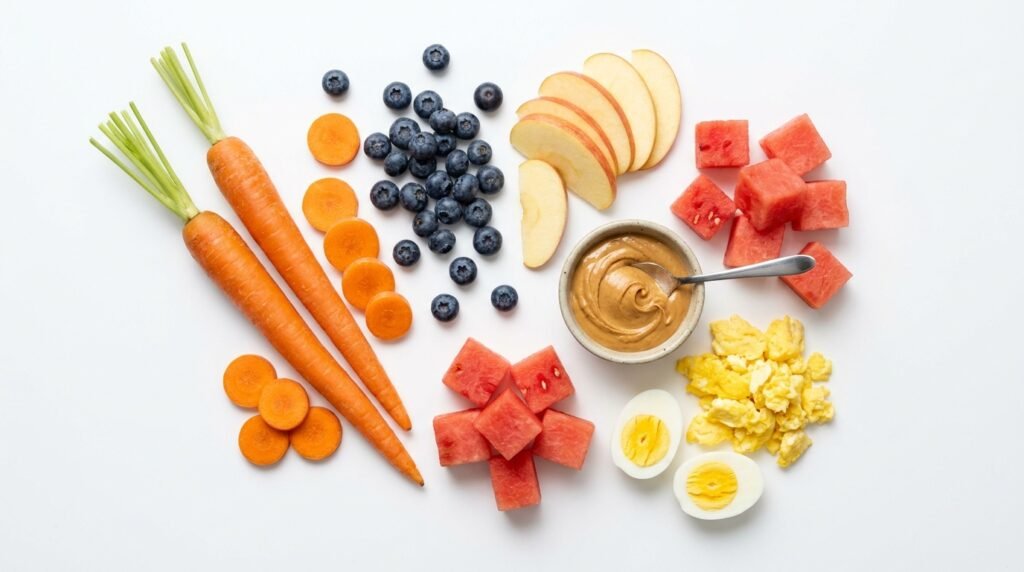
| Food | Safe for Dogs? | Notes |
| Chicken (Boiled) | ✅ YES | Plain only — no seasoning |
| Carrots | ✅ YES | Great low-calorie snack |
| Blueberries | ✅ YES | Rich in antioxidants |
| Peanut Butter | ✅ YES (plain) | Must be xylitol-free — check label! |
| Rice (Cooked) | ✅ YES | Good for an upset stomach |
| Eggs (Cooked) | ✅ YES | Excellent protein source |
| Watermelon | ✅ YES | Remove all seeds and rind |
| Apples | ✅ YES | Remove the core and seeds first |
| Chocolate | ❌ NO | Toxic — can be fatal |
| Grapes / Raisins | ❌ NO | Causes acute kidney failure |
| Onion / Garlic | ❌ NO | Destroys red blood cells |
| Xylitol | ❌ NO | Extremely toxic — found in many products |
| Avocado | ❌ NO | Contains persin toxin |
| Macadamia Nuts | ❌ NO | Causes weakness and vomiting |
Human Foods That Are Safe for Dogs
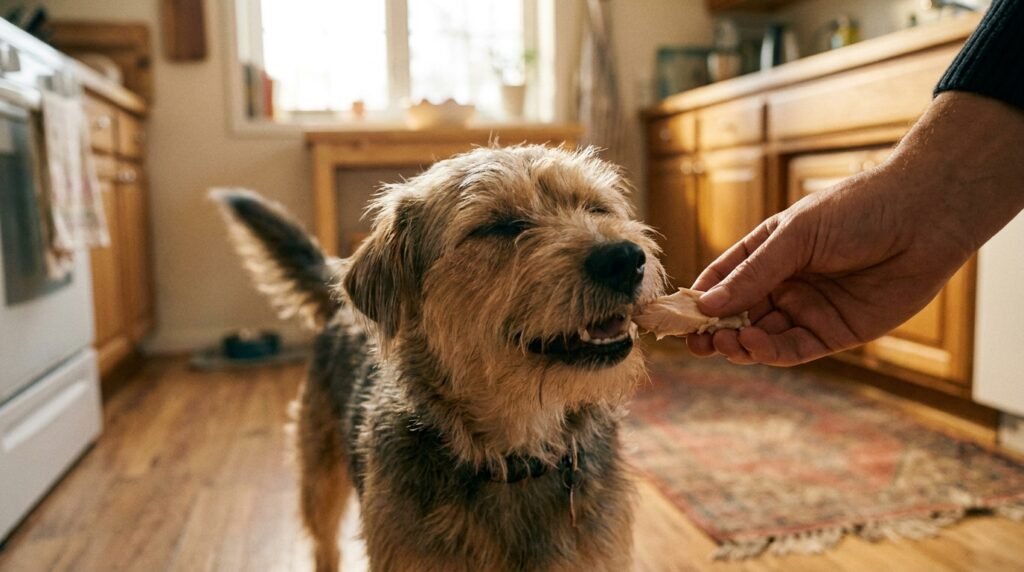
Let us dive deeper into each safe food and how to serve it properly.
1. Cooked Chicken or Turkey
Plain boiled chicken is one of the best human foods you can give your dog. It is high in protein and very easy to digest. Always remove all bones before serving, since Never add any seasoning, garlic, or onion.
Best way to serve: Shred the chicken and mix it with your dog’s regular food.
2. Carrots
Carrots are a fantastic low-calorie treat for dogs. They are rich in beta-carotene, fiber, and important vitamins. Most dogs love the satisfying crunch.
Pro tip: Freeze carrots during summer — they become a refreshing treat and can soothe teething pain in puppies.
3. Blueberries
Blueberries are a true superfood for dogs. They are packed with antioxidants, dietary fiber, and vitamin C. Offer them as a small treat — a handful per day is plenty for most dogs.
4. Peanut Butter (Plain)
Dogs absolutely love peanut butter, and it is a good source of healthy fats and protein. However, you must always check the ingredient label very carefully before giving it to your dog.
NEVER give peanut butter that contains xylitol. Xylitol is extremely toxic to dogs and can cause rapid insulin release and life-threatening liver failure.
5. Cooked Rice
Plain white rice is gentle on a dog’s stomach and is commonly recommended by vets when a dog is experiencing diarrhea or other digestive issues. It is easy to digest and helps firm up loose stools.
6. Eggs (Fully Cooked)
Fully cooked eggs are an excellent source of protein and fatty acids for dogs. Always make sure eggs are thoroughly cooked before serving. Raw eggs can carry Salmonella bacteria and also contain avidin, a compound that blocks the absorption of biotin (vitamin B7).
7. Watermelon
Watermelon is made up of about 92% water, making it a perfect hydrating treat during hot summer months. It is also rich in vitamins A, B6, and C.
Always remove all seeds and the rind before giving watermelon to your dog.
8. Apples
Apples are a healthy and naturally sweet treat for dogs. They provide good amounts of vitamins A and C and are high in dietary fiber.
Bananas are safe for dogs in small quantities. They are a good source of potassium, fiber, and several vitamins. Because they are high in natural sugar, bananas should only be an occasional treat — not a daily snack.
10. Sweet Potatoes (Cooked)
Cooked sweet potatoes are an excellent food for dogs. Always serve them plain and fully cooked never raw, as raw sweet potato is difficult for dogs to digest.
11. Green Beans
They make a great snack for overweight dogs who need filling food without extra calories. Serve them fresh, frozen, or canned — but always with no added salt.
12. Oatmeal (Plain Cooked)
Plain cooked oatmeal is a good option for dogs, especially those with grain sensitivities. It is a solid source of soluble fiber that supports healthy digestion. Always serve it plain — without sugar, milk, honey, or any flavorings.
Human Foods That Are Dangerous for Dogs
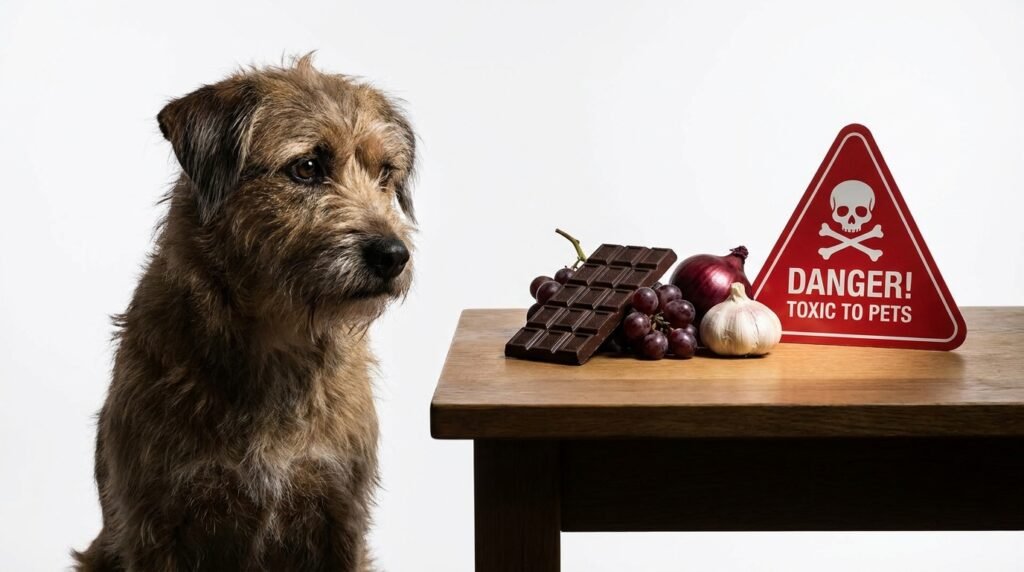
The following foods should NEVER be given to dogs under any circumstances:
1. Chocolate
Chocolate contains two stimulants — theobromine and caffeine — both of which are toxic to dogs. Symptoms of chocolate poisoning include vomiting, diarrhea, rapid heart rate, tremors, and seizures. In severe cases, it can be fatal.
2. Grapes and Raisins
Even very small amounts of grapes or raisins can trigger sudden, severe kidney failure in dogs. The exact toxic compound responsible is still unknown to researchers, but the reaction can be rapid and life-threatening.
If your dog has eaten grapes or raisin, contact your vet immediately — do not wait for symptoms to appear.
3. Onions, Garlic, and Chives
All forms of onion and garlic — whether raw, cooked, or powdered — are toxic to dogs. These foods destroy red blood cells, which leads to hemolytic anemia. Symptoms may not appear for several days after ingestion, making this especially dangerous.
4. Avocado
Avocados contain a natural fungicidal toxin called persin, which can cause vomiting and diarrhea in dog. The large pit is also a serious choking and intestinal blockage hazard. Every part of the avocado plant — the fruit, pit, skin, and leaves — should be kept away from dogs entirely.
5. Alcohol
Even tiny amount of alcohol can cause severe harm to dogs, including vomiting, disorientation, loss of coordination, difficulty breathing, and in serious cases, death.
7. Macadamia Nuts
Macadamia nuts can cause muscle weakness, vomiting, tremors, and elevated body temperature (hyperthermia) in dogs. The exact toxic compound is still unknown, but even a very small amount can trigger these serious symptoms.
8. Raw Yeast Dough
Raw bread or pizza dough can continue to expand inside your dog’s stomach, causing severe pain, bloating, and potentially life-threatening gastric distension. As yeast ferments, it also produces ethanol (alcohol), which adds the risk of alcohol poisoning on top of the physical expansion.
Safe Feeding Tips — How to Give Human Food to Your Dog
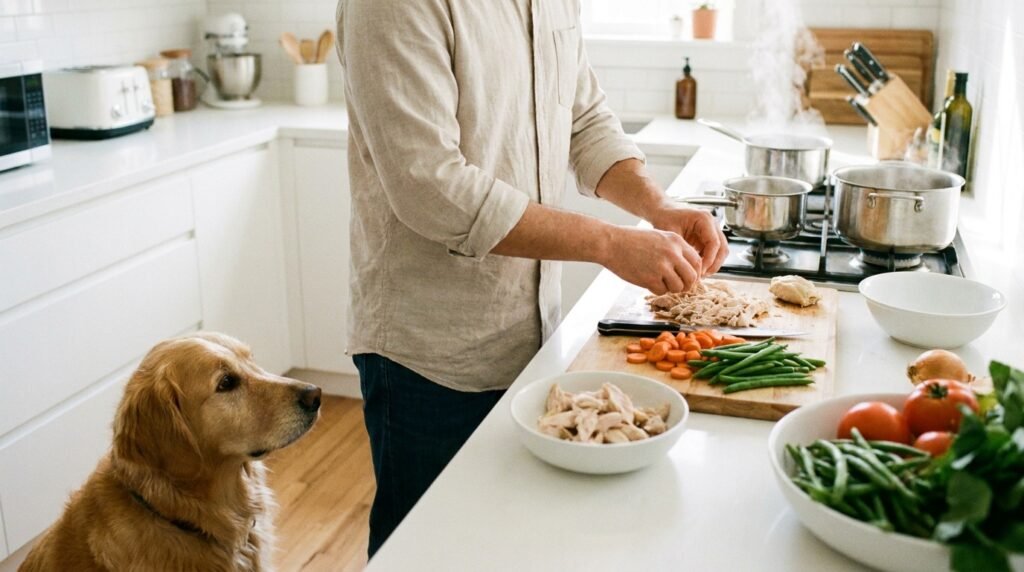
- Always introduce new foods gradually — start with a very small amount and observe your dog’s reaction.
- Never season food with salt, pepper, garlic, onion, or any spices before giving it to your dog.
- Always remove seeds, pits, and cores from fruits before serving.
- Only give plain, thoroughly cooked meats — avoid any sauces, marinades, or gravies.
- Human food should never make up more than 10% of your dog’s total daily calorie intake.
- Always consult your vet before regularly adding any new human food to your dog’s diet.
- If your dog show any unusual symptoms after eating, contact your vet straight away.
Important: Every dog is different. Some dogs may have allergies or sensitivities to foods that are generally considered safe. Always monitor your dog carefully after introducing any new food into their diet.
Signs Your Dog May Have Eaten Something Toxic
Watch for the following warning signs after your dog eats anything unfamiliar:
- Vomiting or diarrhea — especially if severe, repeated, or bloody
- Excessive drooling or foaming at the mouth
- Loss of coordination, stumbling, or trembling
- Visibly swollen or bloated abdomen
- Laboured or difficulty breathing
- Sudden collapse or loss of consciousness
- Seizures or uncontrollable muscle spasms
If you notice any of these signs, call your vet or the Pet Poison Helpline immediately. Time is critical — early treatment can save your dog’s life.
Frequently Asked Questions
Can dogs eat bread?
Plain white or wheat bread is generally safe for dogs in small amounts, provided your dog has no wheat allergy. However, always avoid bread that contains raisins, nuts, garlic, or onion, as these ingredients are toxic to dogs.
Can dogs eat cheese?
Most dogs can enjoy small amounts of cheese as an occasional treat. Low-fat options such as mozzarella or plain cottage cheese are better choices than rich or aged varieties. Keep in mind that some dogs are lactose intolerant, so watch for any signs of digestive discomfort after feeding.
Can dogs eat rice every day?
Plain cooked rice can be included in your dog’s diet regularly, but it should not replace a complete and balanced dog food. It is best used as a supplement to their regular meals, or temporarily during periods of digestive upset.
Can dogs eat cooked fish?
Yes! Cooked fish — especially salmon — is excellent for dogs. support healthy skin, coat, and joints. Always ensure the fish is fully cooked with all bones removed, and never season it before serving.
Is peanut butter safe for dogs daily?
A small amount of plain peanut butter (free of xylitol) is safe as an occasional treat. However, due to its high fat content, feeding peanut butter every day can contribute.
Can puppies eat human food?
Puppies have more sensitive and still-developing digestive systems compared to adult dogs. While many of the safe human foods listed above can also apply to puppies, it is always best to stick primarily to high-quality, vet-approved puppy food during the first year of life. Consult your vet before introducing any human food to a young puppy.
Final Thoughts

Sharing food with your dog can be wonderful way to bond and even provide some nutritional variety — but only when done correctly and safely. The key is knowing which human foods are genuinely safe, serving them plain and in moderation, and always staying alert for any adverse reactions.
When in doubt, always ask your vet before introducing something new. Your dog’s health and safety should always come first.
Want more expert pet care tips? Visit PawLifeGuide.com for vet-approved guides on dog nutrition, health, training, and more. Bookmark us and give your pet the best life possible!