
Both Purina Pro Plan and Royal Canin are vet-recommended, science-backed pet food brands. Purina Pro Plan prioritizes high-protein formulas with real meat as the first ingredient, making it a strong choice for active dogs and budget-conscious owners. Royal Canin specializes in breed-specific and condition-specific nutrition, making it the better fit for pets with distinct health needs or unique breed characteristics.
This guide breaks down everything you need to know about Purina Pro Plan vs Royal Canin: ingredient quality, product variety, pricing, vet recommendations, and who each brand genuinely serves best. By the end, you’ll have a clear picture of which brand belongs in your shopping cart.
What Is Purina Pro Plan, and What Makes It Different?
Purina Pro Plan is a premium pet food line from Nestlé Purina, one of the largest pet nutrition companies in the world. Launched in 1986, Pro Plan was designed to bridge the gap between everyday commercial food and veterinary-grade nutrition. Purina employs over 400 scientists, veterinarians, and nutritionists, and conducts feeding trials at its own research facilities — a level of investment that sets it apart from many competitors.
The brand’s philosophy centers on high-performance nutrition backed by scientific research. Purina Pro Plan is the official food of the Westminster Kennel Club Dog Show and has sponsored the Incredible Dog Challenge for over 20 years two of the most demanding canine athletic competitions in the country. That association with performance isn’t just marketing; many of Pro Plan’s formulas are specifically engineered for active and working dogs.
What product lines does Purina Pro Plan offer?
Purina Pro Plan’s catalog covers the full life cycle for both dogs and cats:
- Puppy and Kitten – High-protein formulas to support early development
- Adult – Maintenance formulas for healthy adult pets
- Adult 7+ – Senior-focused nutrition for aging dogs and cats
- Sensitive Skin & Stomach – Gentle formulas for pets with digestive sensitivities
- Weight Management – Calorie-controlled options
- Sport – High-performance formulas (30% protein, 20% fat) for active and working dogs
- Pro Plan AdvantEDGE – The brand’s newest innovation, featuring Digestive Support+ and Senior Support+ formulas for both dogs and cats
In most Purina Pro Plan formulas, a named protein source chicken, salmon, turkey, or beef appears as the first ingredient. Many formulas also include live probiotic cultures (such as Lactobacillus acidophilus) to support digestive health, a feature that distinguishes Pro Plan from most competitors in its price range.

What Is Royal Canin, and What Makes It Different?
Royal Canin was founded in 1968 in France by veterinarian Jean Cathary, whose original goal was simple: improve the health of pets through precise, science-based nutrition. More than 50 years later, Royal Canin now owned by Mars, Incorporated — operates in over 100 countries and remains one of the most clinically respected pet food brands in the world.
Royal Canin’s core philosophy is that every pet is unique, and their nutritional needs should reflect that. The brand has built an extensive catalog of breed-specific diets covering more than 50 dog breeds and numerous cat breeds, from French Bulldogs and German Shepherds to Maine Coons and Persians. This level of specialization is virtually unmatched in the pet food industry.
What product lines does Royal Canin offer?
Royal Canin’s product range is organized around several pillars:
- Breed-specific formulas – Tailored to the anatomical, metabolic, and health predispositions of specific breeds (e.g., a formula for Bulldogs accounts for their flat faces and tendency toward digestive issues)
- Size-based formulas – Mini, Medium, Maxi, and Giant formulas calibrated to the energy and joint needs of different body sizes
- Health condition formulas – Both over-the-counter and veterinary-exclusive diets targeting issues like urinary health, skin sensitivity, weight management, and digestive disorders
- Royal Canin Fresh Health Nutrition – A newer line of fresh, complete meals tailored to dogs’ health needs at every life stage
- Veterinary diet range – Prescription formulas available only through veterinarians, designed for pets managing chronic conditions like kidney disease, liver disease, food allergies, and more
Royal Canin’s ingredient philosophy differs noticeably from Purina Pro Plan’s. Rather than leading with whole meats, Royal Canin often uses concentrated protein sources like chicken by-product meal — a high-protein ingredient that, despite its unappealing name, is a legitimate and nutritious source of animal protein. The brand prioritizes precise nutrient ratios and palatability over the “real meat first” marketing angle.
Image 3

Purina Pro Plan vs Royal Canin: Head-to-Head Comparison
How do the ingredients compare between Purina Pro Plan and Royal Canin?
Ingredient quality is where the two brands diverge most visibly.
Purina Pro Plan leads most of its formulas with a named whole protein source — chicken, salmon, or lamb — which many pet owners and nutritionists view favorably. Formulas commonly include rice and corn as carbohydrate sources. Some formulas use chicken by-product meal and corn gluten meal, which are nutritionally sound but draw criticism from owners who prefer whole-food ingredients. The inclusion of live probiotics in many Pro Plan formulas is a genuine nutritional advantage that supports gut health.
Royal Canin frequently lists chicken by-product meal or a similar concentrated protein source first, followed by grains like brewers rice and corn. The brand argues — with scientific support — that the precise balance of nutrients matters more than the form in which those nutrients are delivered. For pets with breed-specific health conditions, this precision can have meaningful clinical outcomes. However, Royal Canin’s ingredient lists are often less appealing at first glance to owners who prioritize whole, minimally processed ingredients.
Choose Purina Pro Plan if whole meat as the first ingredient is a priority, or if your dog is highly active and benefits from high-protein, high-fat formulas.
Choose Royal Canin if your pet has a specific breed predisposition, chronic health condition, or requires a veterinary prescription diet.
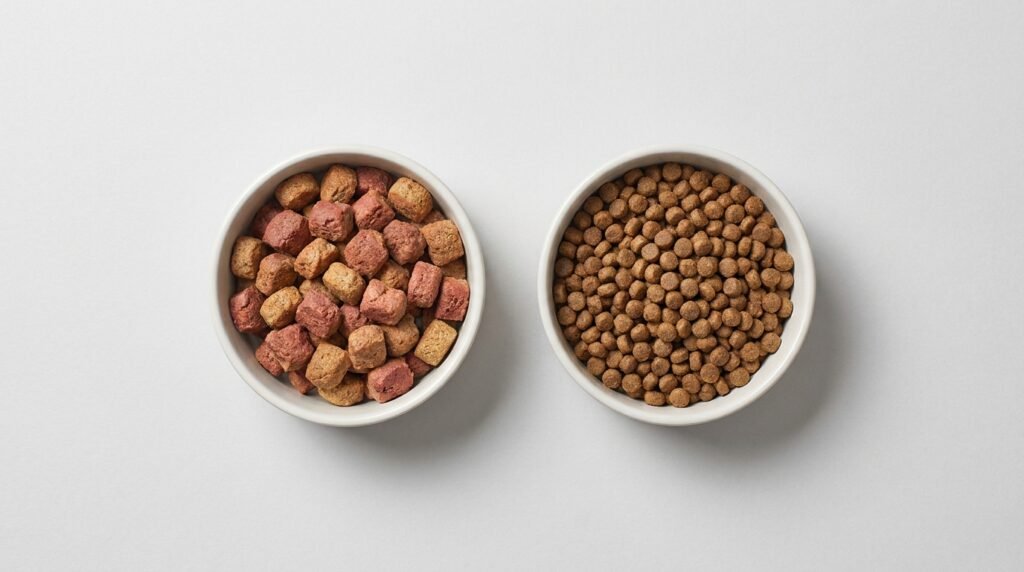
How do the prices compare between Purina Pro Plan and Royal Canin?
Price is one of the more significant differences between the two brands.
Purina Pro Plan generally falls in the moderate premium range. A 30-pound bag of dry dog food typically costs between $50 and $70, depending on the formula and retailer. This makes Pro Plan one of the more affordable vet-recommended brands on the market.
Royal Canin sits at a higher price point. A 25–30 pound bag of Royal Canin dry dog food typically ranges from $60 to over $100, with breed-specific and veterinary diet formulas sitting at the higher end. For cat owners, smaller bag sizes can make the per-pound cost even higher.
If budget is a meaningful factor, Purina Pro Plan offers comparable nutritional quality at a lower cost for most everyday pet health needs.

Which brand do vets recommend more: Purina Pro Plan or Royal Canin?
Both brands enjoy strong veterinary endorsement, and neither has a clear edge here — though they tend to be recommended in different contexts.
Purina Pro Plan is frequently cited in peer-reviewed nutritional research, and Purina’s in-house research capabilities are among the most robust in the industry. Vets commonly recommend Pro Plan for healthy dogs and cats across all life stages, particularly active or performance animals.
Royal Canin holds an especially strong reputation in the veterinary and breeding communities. Its prescription diet line is one of the most comprehensive available, and many veterinary schools and specialty clinics carry Royal Canin exclusively. For managing chronic disease or breed-specific conditions, Royal Canin is often the first recommendation.
What are the recall histories of Purina Pro Plan and Royal Canin?
Neither brand has a recent widespread recall that would raise serious concern. Both have had limited, targeted recalls over the years — a near-universal reality for large-scale pet food manufacturers. Purina and Royal Canin both maintain quality control programs and meet Association of American Feed Control Officials (AAFCO) standards for complete and balanced nutrition.
Pet owners who want to stay informed on recall activity can monitor the FDA’s pet food recall database directly. (Link this phrase to the FDA recall page as an outbound link — Rank Math scores outbound links to authority sites.)
Which brand is better for cats: Purina Pro Plan or Royal Canin?
For cats, both brands perform well, but the right choice again depends on the individual animal.
Purina Pro Plan offers strong cat food options across life stages, including kitten, adult, senior, indoor, urinary health, and weight management formulas. The Sensitive Skin & Stomach line has received positive attention for cats with digestive sensitivities. Many formulas include omega fatty acids for coat health and live probiotics for digestion.
Royal Canin excels for cats with breed-specific needs — Persian, Siamese, Maine Coon, and Ragdoll owners will find purpose-built formulas that account for their cats’ unique jaw structure, coat type, and metabolic quirks. Royal Canin’s veterinary range for cats also covers a wide array of health conditions, from kidney support to hypoallergenic diets.
[IMAGE 6 HERE: See Image Plan table for prompt and alt text]
Who Should Choose Purina Pro Plan?
Purina Pro Plan is the stronger choice for:
- Active, working, or sport dogs that need high-protein, high-fat formulas
- Owners who prioritize whole meat as a first ingredient
- Budget-conscious pet owners who want vet-recommended nutrition without paying premium prices
- Pets without specific breed-related health concerns or chronic conditions
- Dog and cat owners looking for a widely available brand with a broad product range
Who Should Choose Royal Canin?
Royal Canin is the stronger choice for:
- Pets of specific breeds with known health predispositions (e.g., Bulldogs, Dachshunds, Maine Coons)
- Pets managing chronic health conditions requiring veterinary prescription diets
- Breeders and show dog/cat owners who want breed-optimized formulas
- Owners whose vet has specifically recommended Royal Canin for a diagnosed condition
- Cats with unique palatability needs, given Royal Canin’s strong focus on taste and texture formulation
Making the Right Call: Purina Pro Plan vs Royal Canin
Purina Pro Plan and Royal Canin are both excellent choices — and the fact that you’re comparing the two means you’re already doing right by your pet. The decision ultimately comes down to what your animal actually needs.
For a healthy, active dog with no breed-specific health concerns, Purina Pro Plan delivers outstanding nutrition at a fair price, backed by decades of research and one of the most rigorous in-house science programs in the industry. For a pet with a specific breed predisposition, a complex health condition, or a need for prescription-level nutritional support, Royal Canin’s precision and veterinary range make it difficult to match.
When in doubt, consult your veterinarian. They can assess your pet’s individual needs, review their health history, and make a recommendation based on real clinical context — not just brand reputation.
Frequently Asked Questions
Is Purina Pro Plan or Royal Canin better for dogs with sensitive stomachs?
Both brands offer formulas designed for digestive sensitivities. Purina Pro Plan’s Sensitive Skin & Stomach line uses salmon or lamb as the primary protein source and includes live probiotics, which actively support gut health. Royal Canin’s Gastrointestinal formula is available both over-the-counter and as a veterinary prescription product for more severe digestive conditions. For mild sensitivities, Pro Plan is a cost-effective first step; for diagnosed gastrointestinal disorders, Royal Canin’s vet diet range may be more appropriate.
Can I switch my dog from Royal Canin to Purina Pro Plan?
Yes, but any food transition should be done gradually over 7–10 days to avoid digestive upset. Start by mixing a small amount of the new food with the existing food, then gradually increase the proportion of the new food each day. If your pet is on a Royal Canin veterinary prescription diet for a diagnosed health condition, consult your vet before switching.

Which brand is backed by more scientific research?
Both brands invest significantly in pet nutrition research. Purina, through its Purina Research Center, has published hundreds of peer-reviewed studies and conducts controlled feeding trials. Royal Canin collaborates extensively with veterinary schools and research institutions worldwide. Both are considered science-backed brands within the veterinary community.
Is Royal Canin worth the higher price compared to Purina Pro Plan?
For pets with breed-specific health needs or chronic conditions requiring tailored nutrition, Royal Canin’s premium may be justified. For healthy pets without specific medical requirements, Purina Pro Plan typically delivers comparable nutritional value at a meaningfully lower cost. The value of Royal Canin’s price premium increases the more specialized your pet’s needs are.
Are both Purina Pro Plan and Royal Canin AAFCO compliant?
Yes. Both brands formulate their products to meet AAFCO nutritional standards for complete and balanced pet nutrition across the life stages they serve. AAFCO compliance means the food meets the minimum nutritional requirements established for dogs or cats at specific life stages.
Where can I buy Purina Pro Plan and Royal Canin?
Purina Pro Plan is widely available at major pet retailers, grocery stores, and online platforms like Amazon and Chewy. Royal Canin retail products are similarly available at pet stores and online. Royal Canin’s veterinary prescription diets must be purchased through a licensed veterinarian or with a valid prescription.